
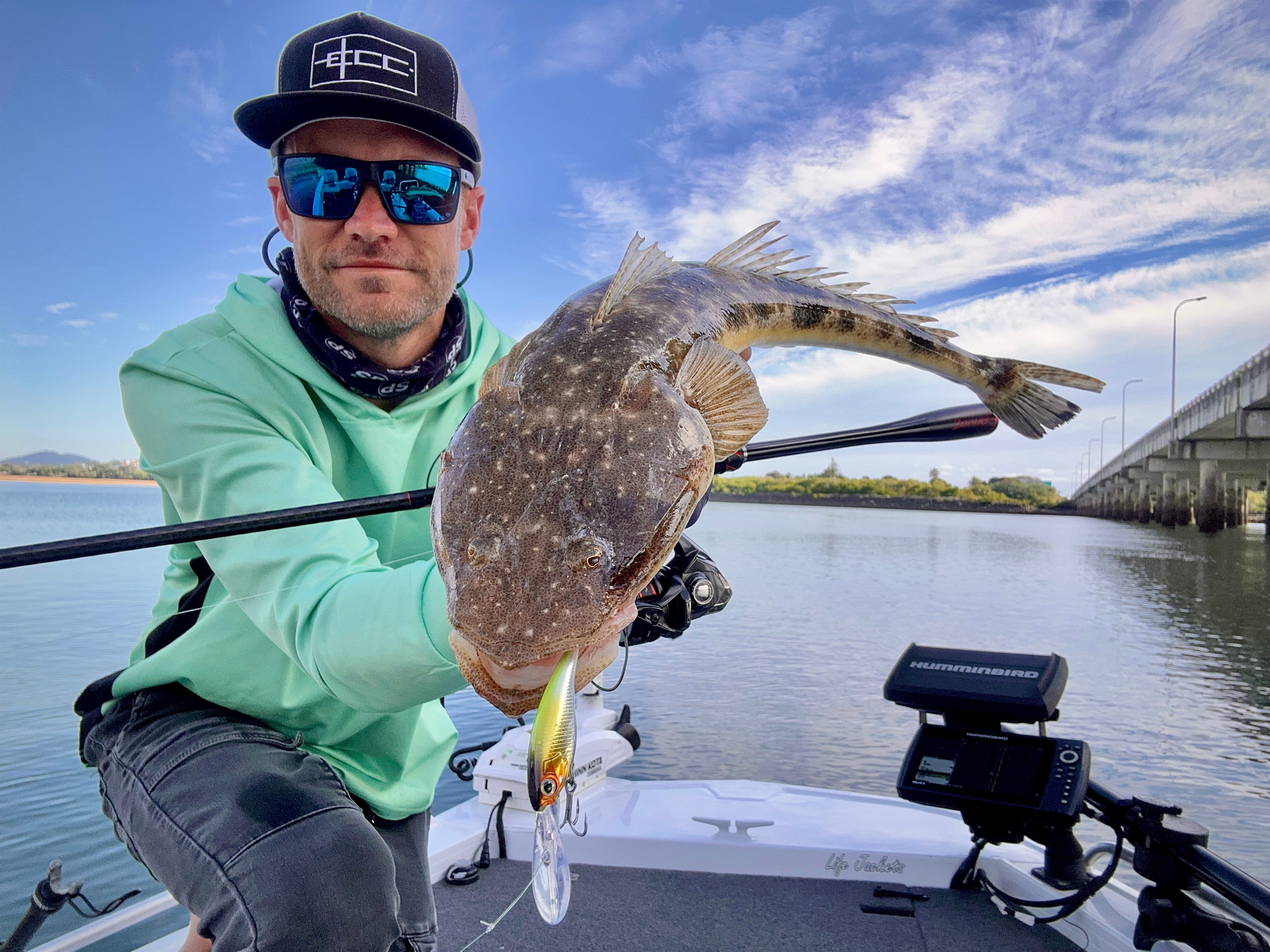
Let’s be honest. There’s something deeply satisfying about dunking a fresh prawn under a float, leaning the rod against the side of the tinnie and cracking a cold one while you wait. Nobody’s going to argue with that. Live bait works, it always has, and it always will.
But something has shifted on the water over the last few years. Walk the pontoons at your local boat ramp on a Saturday morning and you’ll notice it. Tackle boxes full of soft plastics. Fishos who used to swear by live yakkas now rigging up paddle tails. Blokes who laughed at lure fishing five years ago are now asking which colour Yabaliscious works best on the flats.
So what’s going on? Is it just a trend, or is there something genuinely better about fishing soft plastics? And more importantly – if you’ve never made the switch, what are you actually missing out on?
Let’s get into it.
The Case for Live Bait
Before we go any further, let’s give credit where it’s due. Live bait has produced fish for generations of Australian anglers, and there’s a reason it’s still the go-to for plenty of people on the water.
A live mullet fished under a balloon for jew. A fresh squid strip worked along a rocky headland for snapper. A live poddy mullet drifted through a mangrove drain on a run-out tide for mangrove jack. These are time-tested approaches that produce results because they’re offering fish exactly what they’re already eating.
The other thing live bait has going for it is simplicity. You don’t need to think much. The bait does its thing, fish eat it, you strike. There’s no technique to master, no retrieve to dial in, no reading the water to figure out what action to impart. It’s straightforward, and that’s genuinely valuable, especially when you’re fishing with kids or just want a relaxed session.
So why are people switching? What could possibly be better than the real thing?
What Bait Can’t Do
Here’s where it gets interesting. Live bait is great, right up until it isn’t.
Think about how much of your session actually involves your bait being in the right spot. If you’re anchored up on a mud flat waiting for flathead to come to you, bait makes sense. But fish don’t always cooperate. A lot of the time, especially in estuaries and tidal systems, fish are moving. They’re following bait schools along gutters, patrolling drop-offs, holding tight to structure and picking off anything that wanders too close.
To catch those fish, you need to cover water. And that’s something bait fishing simply isn’t built for.
The Bait Board Problem
Let’s talk about the bait board for a second. Getting bait sorted before a session is a whole operation. Catching live poddy mullet in the net at first light. Running to the servo for frozen prawns at 5am. Keeping yakkas alive in the bucket, watching them go belly-up one by one in the heat. The logistics alone can eat half your session.
Then there’s the mess. Anyone who’s tried to de-hook a flathead with bait juice on their hands on a rocking boat knows the feeling. And if you’re regularly bringing kids or mates who aren’t into handling live bait, it becomes a whole thing.
Soft plastics eliminate all of that. Grab your gear, rig up, and you’re fishing. No bait buckets, no trips to the servo, no soggy prawns leaking into the bottom of your bag.
Pickers, Catfish and the Bait Tax
Anyone who’s fished bait in an estuary knows the bait tax. You cast out, and within seconds something small and annoying has stripped the hook clean. Pickers, bream fingerlings, hardiheads, the occasional catfish — they all want a piece. You spend half your session re-baiting instead of actually fishing.
A well-made soft plastic — one that’s actually built with tough, bite-resistant material — will shrug off those small nibbles and keep fishing. You stay in the zone longer, you cover more water, and you’re not constantly interrupting the session to sort out your rig.
What Soft Plastics Actually Do Better
Right, so bait has its limitations. But that still doesn’t answer the real question: can soft plastics actually out-fish live bait? The answer is yes!
You Can Cover Water
This is the biggest one. When you’re fishing soft plastics, you’re actively hunting fish rather than waiting for them to come to you. You can work a flat systematically, fan-casting across a gutter, covering ground with every cast. If the fish aren’t biting in one spot, you pick up and move. You stay mobile, you stay in contact with the fish.
For estuarine species like flathead and bream, this matters enormously. Flatties aren’t always stacked up in one spot. They’re spread across structure, sitting in ambush positions along sandy edges. The angler who can cover 200 metres of flat in an hour is going to find more fish than the one who’s been anchored in the same spot all session hoping something swims past.
They Trigger Reaction Bites
Here’s something bait can never do: trigger a reaction bite. A predatory fish that’s not actively feeding can be switched on by a lure that moves erratically, darts away suddenly or vibrates through the water in a way that mimics a fleeing baitfish. That sudden panic movement fires up an instinct that’s hardwired into every predatory species in Australian waters.
A dead prawn sitting on the bottom can’t do that. It just sits there, looking like what it is. A well-presented soft plastic can look like a prawn, a mullet fingerling, a yabby, and then suddenly shoot away like it’s just spotted something dangerous. That’s a whole different kind of bite trigger, and it gets you fish that bait simply won’t.
Fish Smarter in Clear Water
Clear water is where a lot of bait fishos get humbled. When fish can see everything, they get picky. They’ll swim up to a prawn, have a good look, and turn away. You see this all the time on shallow flats, fish following, not eating.
A hyper-realistic soft plastic, rigged properly and presented with natural action, can be harder for fish to refuse than the real thing. Why? Because it behaves like a panicked, fleeing animal. A prawn sitting still on a hook doesn’t look like a panicked animal — it looks like a prawn sitting still on a hook. The movement is the difference.
The Scent Angle - Closing The Gap on Bait
One of the most common objections to soft plastics used to be scent. Bait has it naturally, plastics don’t. And fish, especially in tidal systems where smell is a major feeding cue, rely heavily on scent to locate and commit to food.
This is where newer lure design has genuinely changed the game. Features like built-in scent pockets (sometimes called a juice pouch) allow you to load your soft plastic with attractant that slowly releases through the water as you retrieve. The fish finds the scent trail, tracks it, and then sees what looks like a living, fleeing baitfish. That combination of scent and visual realism is seriously hard to ignore.
It’s also the reason anglers using scent-loaded plastics often report fish “holding on” longer than expected – they’re not just biting, they’re eating. And that extra second is sometimes the difference between a hook-up and a missed fish.
The Honest Truth: It’s Not One or the Other
Here’s the thing that a lot of lure fishing converts won’t admit: bait still wins sometimes. In certain conditions, on certain species, with certain rigs, live bait is simply the best tool for the job. An experienced angler knows this and doesn’t fish dogmatically.
But here’s the flip side, soft plastics now cover a lot more ground than they used to. Between advances in material technology, more realistic profile design, and features that address the traditional weakness of artificial lures (that scent problem), they’ve closed the gap on bait significantly in most fishing scenarios.
What most fishos who make the switch discover is this: they start catching fish they weren’t catching before. Not instead of their bait fish, but in addition to them. Because they’re suddenly covering water, fishing actively, and triggering fish that would never have eaten a static bait.
How to Actually Make the Switch
If you’re convinced it’s worth a crack, here’s how to set yourself up properly without buying half the tackle shop and getting frustrated when it doesn’t immediately work.
Start Simple
You don’t need twelve different soft plastic profiles. Pick one or two that suit the species you’re targeting and learn to fish them properly. A 3” paddle tail or a realistic yabby-style soft plastic will cover most estuary situations. Get confident with those before you start expanding the collection.
For flathead on the flats, a natural-coloured paddle tail worked slowly along the bottom is a great starting point. For bream around structure, downsize to a smaller profile and slow everything right down. For mangrove jack, get it tight to the timber and be ready.
Match the Bait in Water
The single most useful thing you can do when selecting a soft plastic is look at what’s naturally in the water. If there are prawns active on a run-in tide, a prawn-profile plastic in a natural colour will get eaten. If there are baitfish schools around, a minnow-style profile in a matching size is the call. This is what “matching the hatch” means, and it applies just as much to lure fishing as it does to fly fishing.
As a general rule in clear water, go natural. In dirty or low-light conditions, bump up the contrast, brighter colours and more vibration give fish something to track when they can’t see clearly.
Get Your Jighead Weight Right
This is where a lot of beginners go wrong. Too heavy a jig head and your plastic sinks too fast, spends more time on the bottom than in the strike zone, and loses its natural action. Too light and you can’t feel what it’s doing, and you’ll struggle to get it down in any current.
A good starting point for shallow estuaries is 1/12oz to 1/8oz in water up to about two metres. Go heavier as the water deepens, or if you’re fishing strong current and need to stay in contact with the bottom. The goal is to feel the lure working, feel the taps, and be in control of the presentation at all times.
Work on Your Retrieve
This is the bit that takes practice but pays off enormously. The most effective retrieve for most estuary soft plastic fishing is the classic lift-and-drop — a slow lift of the rod tip that brings the lure up off the bottom, then a pause as it sinks back down on a semi-tight line. Most bites happen on the drop, so stay focused. If the line does anything unexpected – twitches, moves sideways, goes slack – strike immediately.
Don’t be in a hurry. Slow is almost always better, especially in cooler water when fish are lethargic. Give the lure time to do its job.
Give it a Fair Go
The biggest mistake people make when switching to soft plastics is giving up after two blank sessions and going back to bait. Lure fishing has a learning curve. It rewards anglers who pay attention to conditions, adapt their approach, and keep experimenting.
Stick with it. Put in the casts. And when you get your first fish on a soft plastic – when you feel that tap-tap-thump on the drop and come up tight – you’ll understand exactly why so many fishos have made the switch and never really looked back.
The Bottom Line
Bait fishing isn’t going anywhere, and nobody’s saying it should. But if you’ve been sticking to the bait bucket out of habit rather than conviction, you’re probably leaving fish on the table.
Soft plastics give you mobility, versatility, and the ability to fish actively in a way that live bait simply can’t match. They’ve closed the gap on scent. The profiles have gotten more realistic. The materials have gotten tougher. And for Australian conditions: shallow flats, tidal estuaries, rocky structure, pressured fish, they’re increasingly hard to go past.
The fishos who are catching the most fish right now aren’t the ones who are most loyal to one method. They’re the ones who are most adaptable. Soft plastics are a big part of that toolkit.
Give them a proper crack. You might just surprise yourself.
Ready to make the switch? Browse the full S Tackle soft plastic range at stackle.com.au — Aussie-designed, battle-tested, and built to slay.


