
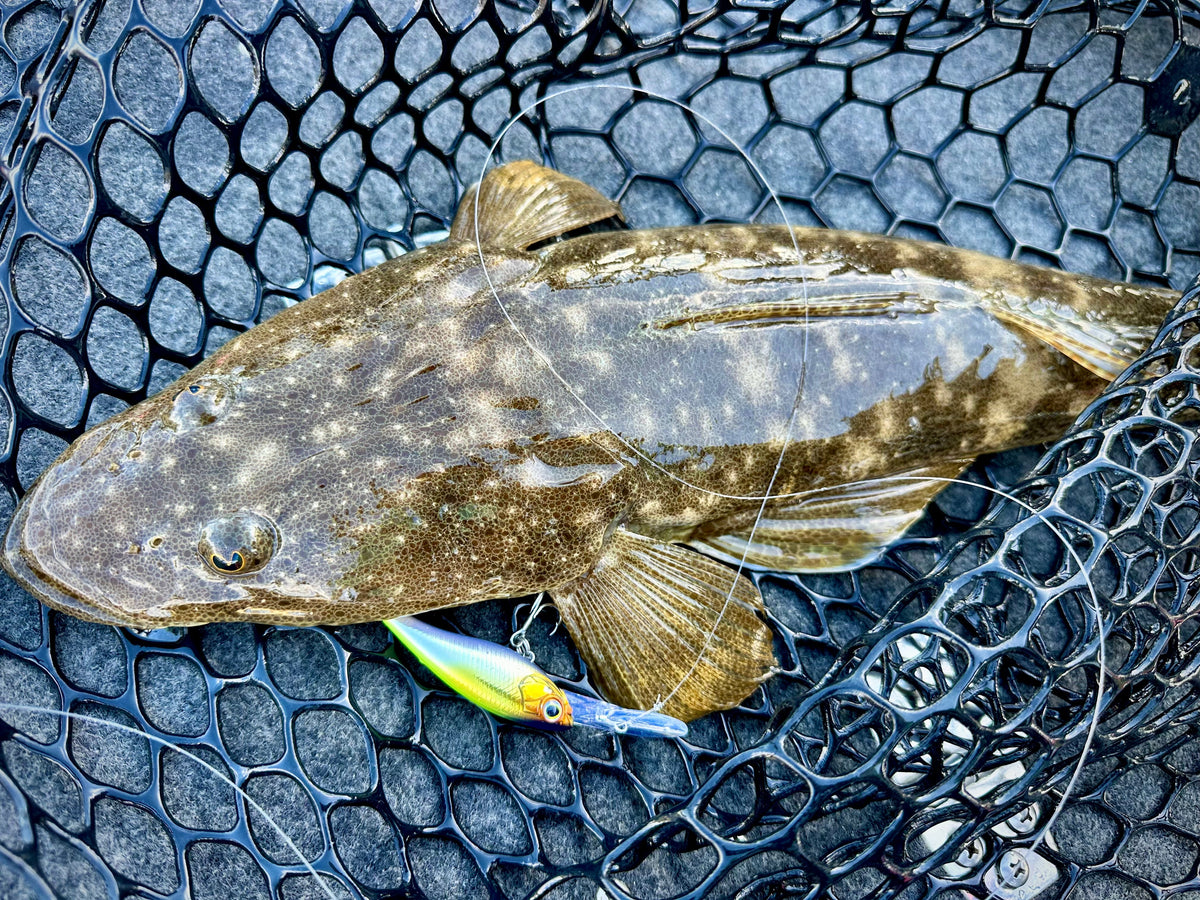
Ask most estuary anglers what's in their flathead kit and you'll hear the same answer every time, soft plastics, jig heads, maybe a scent pouch if they're serious about it. Hardbody lures rarely get a mention, usually filed away as something for bream around a jetty or barra up north. That gap in most tackle boxes is exactly why trolling a hardbody through the right water can produce fish that everyone casting plastics on the same flat walks straight past.
It's not a replacement for soft plastics, it's a completely different way of covering water, and on the days when casting isn't producing, it's often the change that gets the rod loaded up again.
Why Trolling Works Differently to Casting
Casting a soft plastic means working a specific piece of water thoroughly before moving on, which is exactly the right approach when you've identified a likely holding spot. Trolling a hardbody flips that logic. Instead of picking a spot and working it hard, you're covering long, continuous stretches of water, letting the lure search ground for you while you focus on steering the boat along the contour you want to fish.
This matters most on the drop-offs and channel edges that run for hundreds of metres through a system, water that would take an age to properly work with repeated casts, but that a trolled hardbody can search in a single pass while still putting the lure in the strike zone the entire time.
Reading Structure for a Troll Run
The best troll runs follow a consistent depth change, the edge of a channel, the drop from a flat into deeper water, or a contour line running along a bank. Flathead sit along these edges for the same reason they sit on any drop-off, it's an ambush position with an easy retreat to deeper water and a front row seat to anything moving along the depth change.
Checking the sounder on your first pass tells you a lot, both about the depth of the edge itself and where bait is holding along it. A troll run that marks consistent bait sign along a channel edge is worth repeating more than once, since flathead will often sit in loose association with that bait rather than scattered randomly across the whole system.
Matching Dive Depth to the Edge
Shallow Edges
On flats dropping into a metre or two of water, a shallow diving hardbody is exactly what you want, something that gets down into the strike zone quickly without constantly grinding into the bottom. A tight, shimmering action that mimics a fleeing baitfish, such as the S Tackle Shake and Dance Shads, suits this kind of shallow edge work well, since it covers the one and a half to three metre range most estuary drop-offs actually sit in.
Deeper Channels
Where the drop-off runs deeper, adjusting your trolling speed and the amount of line out becomes more important than swapping lures entirely. Letting more line out gets a shallow diver down further, while a touch more speed can help a lure dig deeper into its dive curve, so it pays to experiment with both before assuming you need a completely different lure for deeper water.
Setting the Right Speed
Speed control is where most anglers new to trolling go wrong, either running too fast for the conditions or so slow the lure never develops its proper action. A slow, steady pace that keeps the lure ticking and rolling without it looking like it's being dragged is usually the sweet spot, and it's worth easing off through the coldest parts of a winter morning when everything, including the fish, is moving that little bit slower.
Watching your rod tip as you troll gives a good read on whether the lure is working properly. A steady, rhythmic pulse means it's swimming as designed, while an erratic or flat action usually means it's picked up a bit of weed or is running at the wrong speed for that particular lure.
Working the Turn
Don't overlook the turns at the end of a troll run. As you come around, the lure on the inside of the turn slows down and drops, while the one on the outside speeds up and rises, and that change in action is often exactly what triggers a following fish to finally commit. Plenty of strikes come right on the turn rather than during the straight sections of a run, so it's worth treating that moment as an active part of the technique rather than just a chance to reposition.
Common Mistakes
Trolling too fast for the conditions is the most common issue, particularly through cold water when fish simply won't chase down something moving unnaturally quickly. Ignoring the sounder and trolling blind without paying attention to bait and structure is another, turning what should be a targeted search into an aimless lap of the system. The third is sticking rigidly to one troll run without adjusting for tide, since the exact same edge can fish completely differently on a making tide compared to a run-out.
The Bottom Line
A hardbody isn't there to replace the soft plastics doing the bulk of the work in most flathead kits, it's there to cover the ground a plastic simply can't reach as efficiently. Learning to read a drop-off for a troll run, matching dive depth to the edge you're working, and paying attention to speed and structure turns trolling from an afterthought into a genuinely productive way to find fish other anglers are casting straight past.
Ready to add a hardbody to the kit? Browse the full S Tackle range at stackle.com.au. Outlast the bite. Outfish the rest.


