
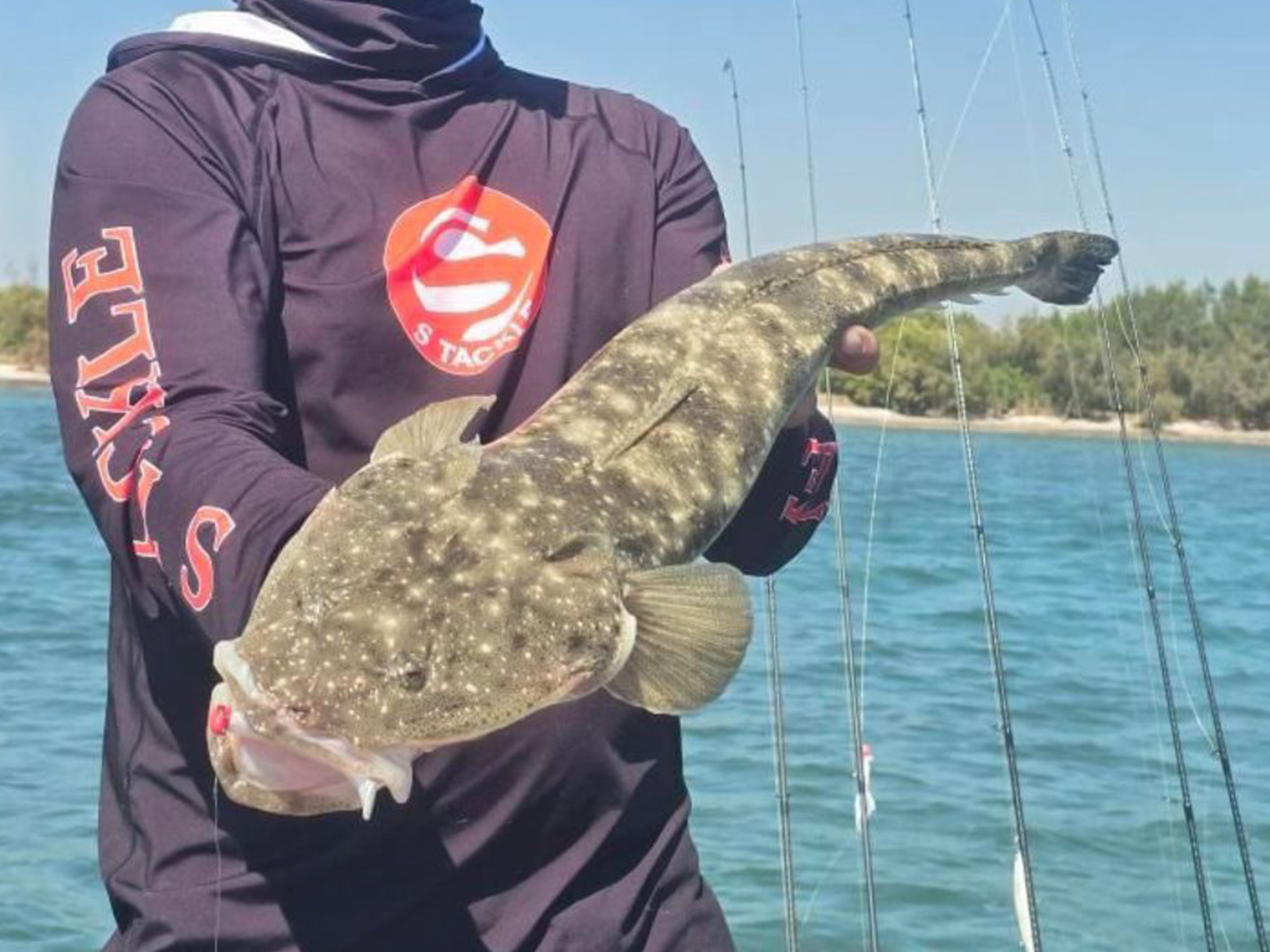
There's a moment on the water that most anglers know but don't think much about. You've found what looks like perfect flathead water, a bit of structure, some depth change, current moving through steadily. You cast out, start winding, and straight away you're fighting the water instead of using it. Nine times out of ten, that's the difference between a session where you cover ground and catch nothing, and one where a handful of well placed drifts put fish on the bank.
Most of us are taught to cast and retrieve. Cast out, wind in, repeat. It's an easy habit to fall into and it works fine enough in still water. But estuaries aren't still water. They're moving systems, shaped by tide and current every single session, and once you start fishing with the movement instead of against it, you start seeing a lot more takes.
Why Flathead Sit Where They Sit
Flathead are ambush predators. They don't chase down a meal across open water if they can help it, they find a position that lets food come to them and they wait. Current is what brings that food past. Bait gets pushed along by the tide, funnelled through gutters, swept past points and structure, and flathead know exactly where that funnel narrows and slows just enough for them to strike without burning much energy.
That means the fish aren't just holding on structure, they're holding on the current itself. A drop off with no flow through it is far less likely to hold a hungry flathead than a modest depth change with a steady push moving across it. Learning to read that push is arguably more important than learning to read the bottom.
Reading the Water Before You Cast
Before the first cast, spend a minute just watching the surface. Look for seams where faster water meets slower water, usually a subtle line or ripple pattern running across the flat. Look for back eddies behind any structure poking out of the water, a moored boat, a pylon, a rock bar. These spots create a pocket of slower water right next to the main flow, and that's prime real estate for a fish that wants to sit still and let dinner come past.
Depth changes matter here too, but combined with current they matter a lot more. A drain that runs hard on the run-out tide is going to concentrate bait far more aggressively than one that barely moves. If you can find a drain mouth with decent flow and a bit of structure nearby, you've found a spot worth properly working rather than firing a couple of casts and moving on.
Setting Up the Drift
Casting Position
Once you've picked your spot, think about where you cast relative to the flow, not just relative to the structure. Casting up current and letting your plastic swing through the zone naturally is going to look a lot more convincing than casting across or down current and cranking it straight back to you. The idea is to let the water carry your presentation past the ambush point the way real bait would move, rather than forcing it through on your terms.
Retrieve Adjustments
This is where a lot of anglers go wrong, because it runs against the instinct to keep winding. Once your plastic is in the zone, ease right off. A gentle twitch here and there is often all it takes to keep the tail working and stop it looking snagged, without overpowering the natural drift. A soft plastic with a tight, consistent paddle action, such as the S Tackle Pad Tail Slim, keeps ticking away even at that slow, controlled pace, which matters when the whole idea is to look like it's drifting rather than swimming hard against the tide.
Pay close attention to your line during the drift too. A lot of bites in this style of fishing show up as a subtle tick or a slight change in tension rather than a hard pull, so staying in contact without dragging the lure off its natural path is a balancing act worth practising.
Where the Push Concentrates Fish
The best current related spots tend to be where two things overlap: a change in depth and a narrowing or bending of the flow. Points, the downstream side of islands, and the mouths of drains and creeks all force water and bait through a smaller space, and flathead know it. If you find a spot like this holding decent current on a run-out tide, it's worth working thoroughly rather than one cast and moving on.
Common Mistakes
The most common mistake is simply casting without thinking about the current direction at all, treating every spot the same regardless of flow. The second is overworking the retrieve out of habit, winding hard the whole way back instead of letting the drift do the work. The third is sticking with a jig head weight that's wrong for the amount of current running, either too heavy and dragging straight to the bottom, or too light and never getting down into the strike zone at all.
The Bottom Line
Fighting the current might feel like you're working harder for your fish, but in most cases you're just working against the exact thing that's putting bait, and therefore flathead, in that spot to begin with. Slow down, read the push before you cast, and let the water do some of the work for you. It's a small shift in approach that often turns a quiet session into one where the rod keeps loading up.
Ready to put it into practice? Browse the full S Tackle soft plastic range at stackle.com.au. Outlast the bite. Outfish the rest.


