
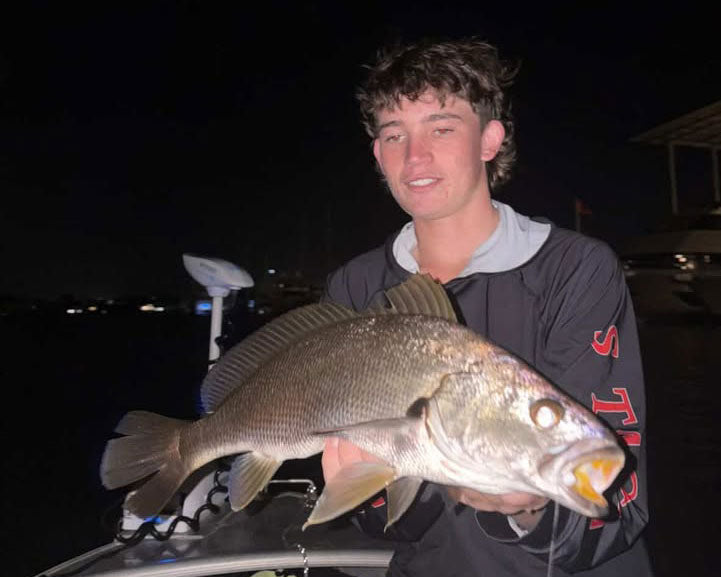
Mulloway have a reputation for being one of the most frustrating fish in Australian estuaries. They're there. You can mark them on the sounder, see them rolling at the surface on a cold night, find the wash of a big fish moving through shallow water in the dark. But getting them to eat is another matter entirely.
Talk to the anglers who catch jewies consistently and you'll notice most of them have one thing in common: they fish after dark. Not as a last resort, but as a deliberate strategy built around how mulloway actually behave. Understanding that behaviour is where consistent mulloway soft plastics night fishing starts.
Why Night Changes Everything for Estuary Mulloway
The jewie is a nocturnal predator by preference. During daylight hours, particularly in clear, pressured estuaries, big fish are cautious. They sit tight in deep structure, they spook at boat noise and shadows, and they're rarely committed feeders. The same fish that ignored every presentation during the day comes out of its holding area after dark, pushes into shallower water, and feeds with a confidence it simply doesn't show in daylight.
Low light reduces the ability of prey to detect and evade predators. It also reduces the jewie's own exposure to the disturbance that makes big fish wary in busy systems. The result is a more committed, aggressive fish. And a more committed fish is a fish you can actually catch.
Where Mulloway Hold After Dark
Mulloway don't wander randomly at night. They follow the same tidal corridors they use during the day, just with far less caution. Tidal channels, drain mouths, bridge pylons, rocky points with deep water access, and the bottom of steep drop-offs are all productive locations. The common thread is depth adjacent to shallow water. Mulloway push up onto edges and flats to feed as the tide floods, then drop back into the channels as the water recedes.
The run-in tide in the first few hours after dark is often the most productive window. Bait schools move with the rising water onto the flats and into the shallows, and mulloway follow them. Getting to your spot before the tide turns and fishing through the first hour of the flood is the classic jewie scenario for a reason. Be there before the fish arrive, not after.
How Their Senses Work at Night
This is the part most fishos skip over, and it's the most useful thing to understand. In daylight, fish rely heavily on vision. At night, two other senses take over. The lateral line, which detects vibration and pressure changes in the water, becomes the primary tool for locating prey at range. And the olfactory system—their sense of smell—takes over once they're close enough to confirm what they've found.
What this means practically is that a lure needs to do more than just look right at night. It needs to give the fish something to find. Anything that produces subtle vibration through the water helps the lateral line do its job. Anything that offers a visual presence in low light—a slight glow, a contrast against dark water—gives the fish something to lock onto once it's in the zone. And a realistic, natural profile closes the deal when the fish gets close enough to look.
These aren't complicated adjustments. They're just logical responses to how the fish is actually hunting in those conditions.
Soft Plastic Presentations That Work
The slow, deliberate lift-and-drop is the most consistently effective retrieve for night fishing for mulloway on soft plastics. Cast uptide, let the lure sink to the bottom, and work it back with long, slow lifts followed by a pause on the drop. Most bites happen on that pause or immediately after the lure contacts the bottom. The retrieve should be slower at night than feels natural. Mulloway aren't chasing at pace in the dark. They're tracking something down and eating it when it looks like an easy target.
Keep the lure working close to the bottom throughout. Mulloway are bottom-oriented feeders and a lure working high in the water column after dark will largely be ignored. Maintaining bottom contact also means you feel bites earlier, which matters because the next part is critical.
Resist the urge to strike the moment you feel the fish. Let the weight come on properly before you drive the hook home. Jewies are committed eaters when they decide to eat, and giving them that beat to turn the lure headfirst makes a significant difference to your hook-up rate.
Gear and Safety Considerations
A head torch is non-negotiable. Not just for rigging up but for managing fish, unhooking safely, and navigating around the water's edge in the dark. Take a fully charged phone. Let someone know where you're fishing and when you expect to be back. If you're wading, stick to water you've walked in daylight and be cautious of depth changes you can't see.
Slightly heavier gear than your usual estuary setup makes sense at night. You're less likely to see a fish running for structure in the dark, and having a bit more authority in the rod gives you options when a big jewie decides it doesn't want to come in.
The Takeaway
Pick a run-in tide after dark. Get to a tidal channel edge or drain mouth before the tide turns. Rig up something with a realistic baitfish profile and a jig head that gives the lure some presence in the dark. Work slow lift-and-drop retrieves right along the bottom, stay focused on the pause, and give the fish time to commit before you strike.
Jewies that have been ignoring you in daylight will start eating. Night fishing for mulloway on soft plastics isn't complicated. It just requires fishing on their terms rather than yours.
Browse the full range of soft plastics and jig heads at stackle.com.au. Aussie-designed, battle-tested, and built for the sessions most fishos never bother to stay up for.


