
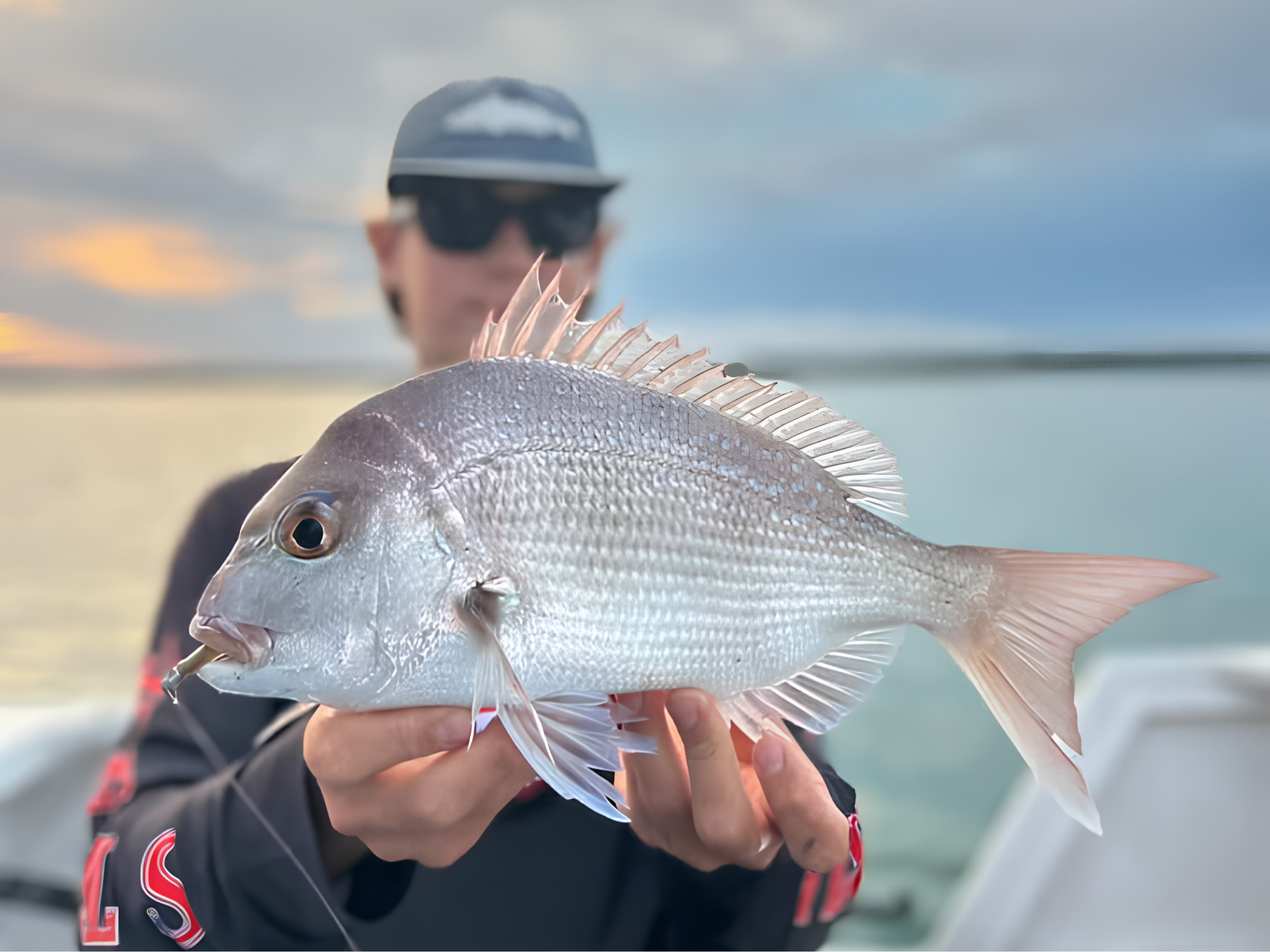
Picture this. You’re wading a shallow estuary flat at first light, the tide’s just turned, and there’s bait flickering everywhere. You know the fish are there. You can see the nervous water. You’ve had a couple of follows but nothing committing. The soft plastic looks perfect, it’s moving right, the colour is on point, and you’re presenting it well. But the fish keep pulling up short.
Sound familiar? Most lure fishos have been there. And more often than not, the thing that’s missing isn’t technique. It isn’t the wrong colour or the wrong profile. It’s scent.
For a long time, scent was the one thing artificial lures simply couldn’t compete with bait on. You could get the look right and the action right, but you couldn’t replicate what a prawn or a mullet smells like to a hungry fish. That gap is closing fast, and understanding why scent matters so much in the first place is the key to fishing soft plastics at the next level.
How Fish Actually Find Their Food
To understand why scent works, you need to understand how fish feed. Most people think of fish as visual predators, and they are, but that’s only part of the story. Fish use a combination of senses to locate, track, and commit to prey, and in a lot of Australian fishing environments, vision is actually further down the priority list than you’d think.
Estuaries, tidal creeks, and mangrove systems are often turbid. The water’s dirty after rain. There’s tannin staining. There’s sediment kicked up by current. In those conditions, fish are relying heavily on two things: their lateral line, which picks up vibration and pressure changes in the water, and their olfactory system, which is their sense of smell.
A fish’s sense of smell is extraordinary. Sharks can detect blood at concentrations of one part per million. Salmon can smell the specific waterway they were born in from hundreds of kilometres away. Flathead, mulloway, and mangrove jack might not be operating at quite that level, but their noses are still remarkably sensitive tools that they use every single day to find food.
The Scent Trail
When a prawn or a small baitfish moves through the water, it leaves a chemical trail behind it. Amino acids, oils, and other compounds disperse into the current, and predatory fish follow that trail upstream to the source the same way a dog follows a scent track. This is called a scent plume, and in tidal systems it can travel a long way.
This is exactly why live bait works so well in certain situations. A live mullet finning around on a hook is constantly releasing those chemical signals into the water. The scent plume drifts downcurrent, a mulloway or a jack picks it up, follows it, and eats. The fish didn’t necessarily see the bait first. It smelled it.
A traditional soft plastic, no matter how realistic it looks, produces no scent trail at all. It moves through the water like a ghost, visually convincing but chemically invisible. And in the right conditions, that invisibility is exactly what costs you fish.
When Scent Matters Most
Not every session calls for scent. In some situations, a fast-moving lure presented to an active, visual predator in clear water will get eaten on sight before scent becomes a factor. But there are specific conditions where adding scent to your soft plastic goes from being a nice-to-have to a genuine game-changer.
Dirty or Stained Water
After rain, after big tides, after wind chop has stirred up the bottom, visibility in our estuaries can drop to almost nothing. Fish are still active in dirty water, often very active, but they’re not hunting by sight. They’re hunting by feel and smell. A soft plastic with no scent in these conditions is working at a serious disadvantage. A scented soft plastic is suddenly competing directly with live bait on the terms fish are actually hunting by.
Slow or Pressured Fish
Winter flatties can be frustrating. The fish are there, you can mark them on the sounder, but they’re lethargic and slow to commit. They’ll follow, have a look, and turn away. Same with pressured bream in popular estuaries that have seen every colour and profile in the catalogue. These fish need more convincing, and scent is often what tips them over the edge.
When a soft plastic lands in the zone and starts releasing a scent signal that smells like food, a fish that was on the fence suddenly has two reasons to eat instead of one. The visual presentation says “prey.” The scent says “food.” That combination is a lot harder to refuse.
Night Fishing
If you fish for jewfish or mangrove jack after dark, you already know that the rules change completely. These species are apex nocturnal hunters that use their lateral line and their nose far more than their eyes in low light. A soft plastic fished at night without any scent is essentially asking a fish to find it by the vibration alone. Add scent, and now the lure is sending out the same chemical signals a real baitfish would, which is a very different proposition.
Getting Fish to Hold On
Here’s something that doesn’t get talked about enough. Scent doesn’t just help fish find the lure. It also affects how long they hold onto it once they’ve committed.
When a fish bites a lure that smells like food, its brain gets a confirmation signal: this is real. It holds on. When a fish bites a lure that tastes and smells like nothing, the rejection reflex kicks in fast. That’s the difference between the tap-tap-thump that results in a solid hook-up and the quick nip you barely felt that was gone before you could react.
On species with quick rejection reflexes, like bream, that fraction of a second can be the margin between a fish in the net and a missed opportunity. Scent buys you time.
The Traditional Solution and Why It Falls Short
Lure fishos have known about the scent problem for years, and the traditional answer has been to add attractant externally: Sprays, fish oil, Pro-Cure, gel. The process is the same, to apply the attractant to the outside of the plastic before you cast, hope it stays on, reapply when it washes off.
It works, to a degree. But it’s got real practical problems. External attractant washes off quickly, especially in current or when you’re fishing actively. You’re stopping every few casts to re-dose the lure, which breaks your rhythm and means you’re spending time fiddling with a bottle instead of fishing. You’ve also got attractant all over your hands, which gets on everything, including your sunglasses, your phone, and that sandwich you’ve been looking forward to since 4am.
More importantly, external attractant doesn’t release scent consistently. You get a burst when you first cast, then it tapers off quickly. What you want is a slow, steady, continuous release that lays a scent trail through the water on every retrieve, the way a real baitfish would. That’s a fundamentally different thing.
How the Juice Pouch Changes the Game
The idea behind a built-in scent pocket is straightforward, but the execution is what matters. Rather than relying on surface-applied attractant that washes off, the soft plastic is designed with an internal cavity, a pouch, that you load with attractant before you fish. As the lure moves through the water, the attractant seeps out slowly and continuously, releasing a scent trail on every single retrieve.
The difference in real-world fishing is significant. You’re not stopping to reapply. You’re not getting a burst-and-fade scent signal. You’re laying down a consistent, natural-smelling trail through the water column on every cast, exactly the way a real prawn or baitfish would. The lure looks like food, moves like food, and now smells like food.
That three-part combination is genuinely hard for fish to resist. And in the situations where scent matters most, dirty water, slow fish, night fishing, pressured estuaries, it’s the thing that turns follows into hook-ups.
Loading the Pouch
Loading a scent pocket is simple. You’re not dealing with complicated rigging or extra steps that slow you down on the water. Squeeze a small amount of your chosen attractant into the cavity, let it settle, and you’re ready to fish. Most attractants will last for multiple casts before you need to reload, meaning you’re spending far more time fishing and far less time prepping.
Prawn-based attractants work well for flathead and bream. Baitfish oil is a strong option for jewfish and jacks. If you’re fishing somewhere with a lot of yabbies in the system, a yabby-based scent can be devastatingly effective, particularly on flatties sitting in ambush on sandy edges.
Rattle + Scent: A Combination Worth Understanding
Some soft plastics pair scent pockets with internal rattle chambers, and it’s worth understanding why that combination is so effective. The rattle produces vibration that travels through the water, mimicking the sound and pressure signature of a struggling or fleeing baitfish. Fish pick that up through their lateral line from a distance. It brings them in close.
Once they’re close, the scent signal takes over, providing the olfactory confirmation that what they’re tracking is worth eating. Then the realistic profile and natural movement close the deal visually. The rattle draws them in, the scent gets them committed, and the visual presentation converts. That’s three separate systems working together to trigger a bite, which is about as close as artificial lures get to replicating what live bait does naturally.
Practical Tips for Fishing Scented Soft Plastics
Match the Scent to What’s in the Water
The same principle that applies to colour and profile, matching the hatch, applies to scent. If you’re fishing a system with a heavy prawn population on a run-in tide, prawn-scented attractant is the obvious call. If there are baitfish schools around and the predators are keyed in on them, use something that smells like baitfish. Paying attention to what’s naturally in the water and matching it is always going to be more effective than picking a scent at random.
Let the Scent Do the Work on the Drop
The drop is where most soft plastic bites happen, and it’s also where scent is working hardest for you. As the lure sinks, the attractant is dispersing around it in the water column, creating a concentrated scent cloud right in the strike zone. Fish sitting below or to the side of the lure will pick that up before they even see the plastic.
This is why slowing down your retrieve pays dividends when you’re fishing scented plastics. Give the lure time to sink through the zone. Let the scent disperse. Don’t be in a rush to lift and cast again. The fish will find it.
Don’t Contaminate Your Scent
This one’s overlooked by a lot of fishos. Human scent, sunscreen, insect repellent, fuel, and other foreign chemicals on your hands can transfer to your lure and actively repel fish. It’s not a myth. Research has shown that certain chemicals commonly found on human skin can trigger alarm responses in fish.
The easiest fix is to rinse your hands in the water before handling your plastics, and to load the scent pocket with attractant before you rig up. That way the first thing the lure smells like when it hits the water is food, not sunscreen.
Reload Before the Bite Drops Off
A scent pocket will last longer than surface-applied attractant, but it still needs reloading. Rather than waiting until you’ve gone cold and wondering why the bite has dropped off, get into the habit of topping up the pouch every 15 to 20 minutes during active fishing, or whenever you change plastics. Keep the scent consistent and keep the trail fresh.
The Takeaway
Scent isn’t a magic fix. There are sessions where the fish are going hard on sight and nothing else matters. But if you’ve been fishing soft plastics and leaving scent out of the equation entirely, you’re giving up a real advantage in a lot of situations.
Fish evolved to find food using every sense available to them. The best artificial lures are the ones that engage as many of those senses as possible. Look, movement, vibration, scent. When all four are working together, you’re not presenting a lure anymore. You’re presenting something that every instinct in a fish’s body is telling it to eat.
That’s what the best soft plastic fishing looks like. And scent is the piece that a lot of fishos are still missing.
S Tackle soft plastics are designed with built-in scent pockets so you can fish smarter from the first cast. Check out the full range at stackle.com.au.


